

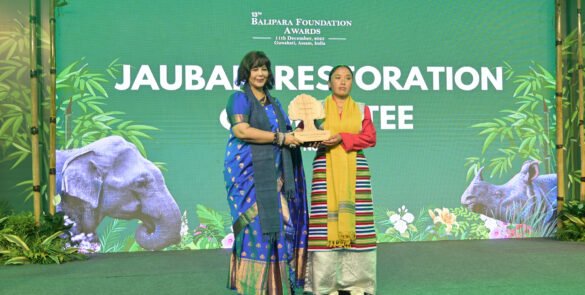
Jaubari Restoration Camp, Nepal
Jaubari restoration Camp was presented the award by Babita Baruah CEO, VML India
The Jaubari Restoration Camp is a women-led community initiative in Jaubari, Ilam, eastern Nepal, working to restore degraded forests and protect the endangered red panda. Led by Ms. Pema Pradhan since 2015 and formally established in 2022, the committee runs the “Plant a Red Panda Home (PARPH)” campaign in partnership with the Red Panda Network, combining scientific monitoring with Indigenous and local knowledge.
The community has planted over 209,000 native trees, built protective fencing and water conservation ponds, and established nurseries supported by local forest guardians and watchers. These efforts have reconnected fragmented forests in the Kangchenjunga Landscape, creating vital corridors for red pandas and supporting rich biodiversity.
Beyond ecological restoration, the initiative empowers women, generates sustainable livelihoods, promotes environmental education, and demonstrates the effectiveness of community-led conservation.
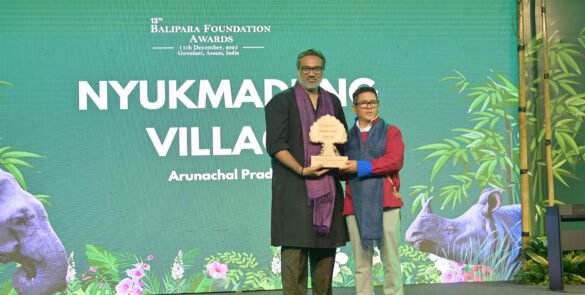
Nyukmadung Village, Arunachal Pradesh
Nyukmadung Village was presented the award by Sourav Roy, CEO, Tata Steel Foundation
Nyukmadung, a high-altitude Monpa village in Arunachal Pradesh’s eastern Himalayas, showcases how community-led conservation can protect biodiversity while strengthening rural livelihoods. Traditionally dependent on Himalayan star anise (Illicium griffithii), unsustainable harvesting had pushed the species toward endangerment, threatening both forests and incomes, especially for women.
In response, the village established a Community Conserved Area Management Committee, enforced a ban on tree felling, and allowed only the collection of naturally fallen fruits. With support from WWF-India, improved monitoring and nursery practices helped regenerate star anise, while NERAMAC market linkages ensured fair returns. Between 2022 and 2023, the community harvested 4–6 metric tons of dried star anise, generating significant income for local households.
Alongside this, women-led collectives have revived traditional yak wool fibre work, creating year-round, conservation-friendly livelihoods. With younger farmers cultivating saplings for the future, Nyukmadung demonstrates how collective governance and cultural knowledge can align conservation with economic resilience.
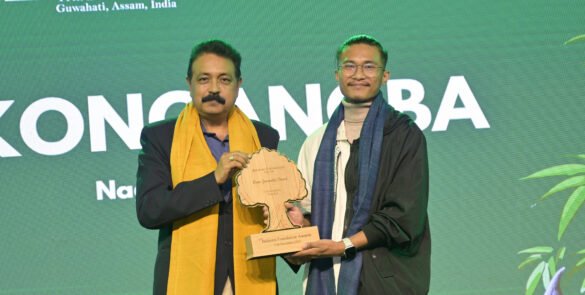
Yimkongangba, Nagaland
Yimkongangba was presented the award by Dr. Rathin Barman, Director & Chief Strategy and Liaison (North-East)
Yimkongangba, has made a significant contribution to amphibian conservation by documenting the Indian flying frog (Pterorana khare), a Vulnerable and poorly studied species. Working within community-managed forests, he spent three years observing the frog’s behaviour and seasonal patterns through dedicated, self-taught fieldwork.
In 2024, his efforts led to the first confirmed record of a thriving population of the species in the Yaongyimchen Community Biodiversity Conservation Area (YCBCA), only the second known habitat in Nagaland and the northernmost record in India. His findings expand scientific understanding of the species’ range and underscore the ecological importance of community-protected landscapes.
Yimkongangba’s journey highlights how passion, local knowledge, and persistence can advance biodiversity research and showcases the vital role of community-led conservation and youth stewardship in safeguarding fragile forest ecosystems.
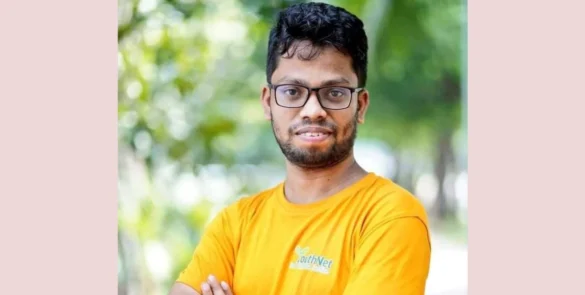
Sohanur Rahman, Bangladesh
Sohanur Rahman, a leading young climate communicator from Bangladesh, links environmental journalism with grassroots advocacy to highlight climate impacts in one of the world’s most vulnerable countries. Beginning as a teenage activist, he documents issues like tidal surges, river erosion, and cyclone displacement through storytelling, digital campaigns, and community media.
As founder of YouthNet for Climate Justice, he leads a youth network that trains volunteers to monitor climate impacts, promote local solutions, and engage policymakers. His work has influenced national debates on loss and damage, climate finance, and youth participation and earned international recognition. Awarded the Green Journalist Award, Sohanur demonstrates how empathetic reporting can amplify marginalized voices and drive transformative climate action.
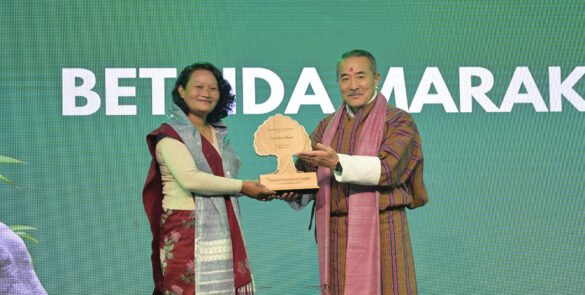
Betsida Ch. Marak, Meghalaya
Betsida Marak was presented the award by His Excellency Kesang Wangdi, Deputy Minister of Privy Council, and Hon'ble Chairperson of Bhutan Trust Fund for Environmental Conservation
Betsida Ch. Marak is a leading conservationist in Meghalaya’s West Garo Hills, dedicated to protecting the critically threatened western hoolock gibbon (Hoolock hoolock). Based in Silsotchigre, she leads the Sonja Wildlife Rescue Centre under the Huro Programme, which houses the world’s largest rescued population of the species. Since 2010, she has overseen the rescue and rehabilitation of gibbons saved from poaching, captivity, and injury, including a landmark successful release back into the wild in 2016.
Beyond rehabilitation, Betsida works closely with local communities to address hunting and habitat loss, drawing on Garo cultural beliefs that regard the gibbon (Huro) as sacred. Education is central to her approach: as principal of the Sonja Wildlife Conservation Medium School, she provides free education to underprivileged children while embedding conservation values in learning.
Recognised internationally with the 2024 IUCN Global Gibbon Champion Award, Betsida’s work demonstrates how conservation rooted in culture, community, and science can restore hope for one of India’s most endangered primates and inspire future forest guardians.
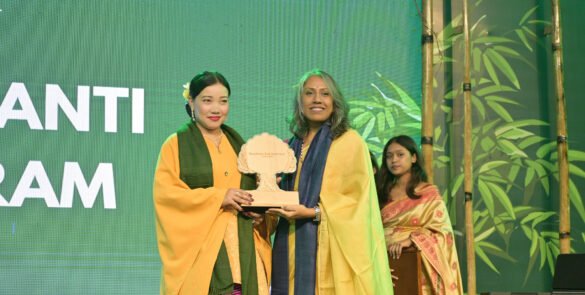
Bijiyashanti, Manipur
Bijiyashanti Tongbram was presented the award by Deepa Subramaniam, Co-Founder, Woody Grass
On the shores of Loktak Lake, Manipur, Bijiyashanti has transformed the lotus—an iconic yet often discarded plant into a sustainable livelihood and cultural revival movement. Drawing from her background in botany, she began experimenting in 2014 with extracting natural fibre from lotus stems, envisioning an eco-friendly textile rooted in respect for Loktak’s fragile wetland ecosystem.
In 2019, she founded Sanajing Sana Thambal (Golden Lotus Thread), training local women in the intricate craft of lotus fibre extraction and weaving. Today, the enterprise employs around 30 women, producing scarves, stoles, and other textiles that blend traditional Manipuri weaving with contemporary design.
Beyond textiles, the initiative empowers women, generates steady incomes, reduces plant waste, and promotes wetland conservation.
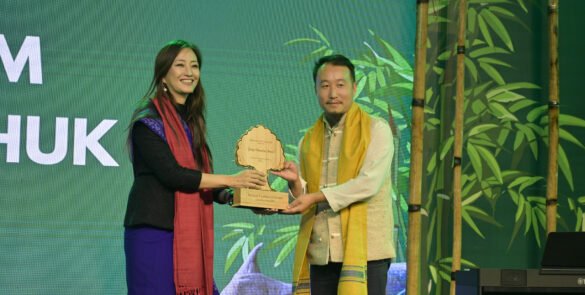
Sonam Wangchuk Lepcha, Sikkim
Sonam Wangcuk Lepcha was presented the award by Bambi Kevichusa, Eco-fashion Designer, Entrepreneur and Cultural Ambassador
Sonam Wangchuk Lepcha, from Dzongu in North Sikkim, is a leading citizen naturalist whose lifelong fascination with butterflies has evolved into significant contributions to biodiversity research and conservation. In 2016, his field observations led to the discovery of a new species, Zographetus dzonguensis (Chocolate-bordered Flitter), formally described in 2021, placing Dzongu firmly on the scientific map as a biodiversity hotspot.
Beyond this landmark discovery, Sonam has documented 420 butterfly species in Dzongu—over 61% of Sikkim’s recorded species—and published widely in scientific journals and books that weave together ecology and Lepcha cultural knowledge. As President of the Butterfly Society of Sikkim, he leads community-based conservation efforts, restores nectar corridors, and inspires youth through education and outreach.
His work exemplifies how local knowledge, scientific collaboration, and cultural identity can come together to safeguard the natural heritage of the Eastern Himalayas.
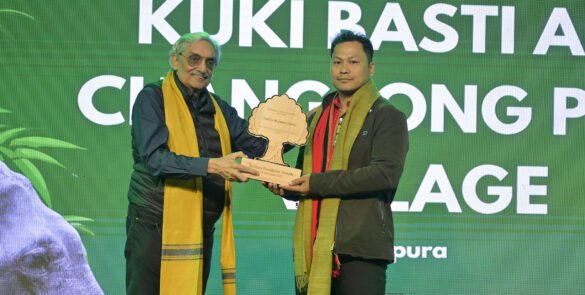
Kuki Basti and Changlong Para Village, Tripura
Kuki Basti and Changlong Para Village was presented the award by Bittu Sahgal, Founder, Sanctuary Nature Foundation
Kuki Basti and Changlong Para in Tripura’s Dhalai district illustrate how community-led transitions can turn fragile upland landscapes into sustainable, year-round livelihood systems. Traditionally dependent on jhum cultivation, declining soil health and food security prompted a shift in 2018 under Tripura’s Bio-Village 2.0 initiative.
The villages collectively moved to permanent, diversified farming—terracing slopes and planting pineapple, citrus, citronella, bamboo, and native timber species. Community nurseries helped restore soil stability, rebuild forest cover, and bring back wildlife, while organic produce began supplying markets in Agartala. Household incomes rose, women gained stable livelihoods, and children learned conservation-linked farming practices. Mature plantations also reduced human–wildlife conflict by guiding elephant movement away from settlements.
Recognised as early success stories within Tripura’s expanding bio-village network, and recipients of the Food for the Future Award, these villages demonstrate how ecological restoration, livelihood security, and community leadership can advance together.
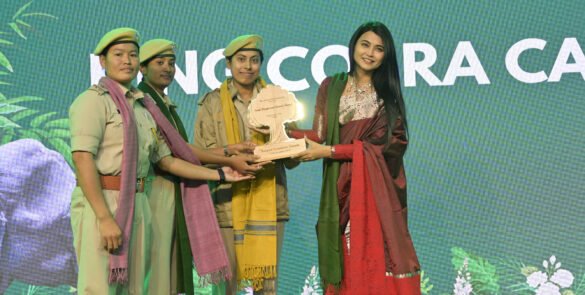
Lokhimoni Dutta, Jitamoni Kakoti, Pompy Bora & Priyanka Pegu - King Cobra Camp, Assam
King Cobra Camp, Assam (Lokhimoni Dutta, Jitamoni Kakoti, Pompy Bora & Priyanka Pegu ) was presented the award by Aimee Barua, Actor
King Cobra Camp, established in August 2023 in the Agoratoli Range of Kaziranga National Park, marks a milestone in Indian conservation as the country’s first all-women anti-poaching unit. Led by Range Officer Bidyut Bikash Bora, the team patrols some of Assam’s most challenging floodplain terrain, undertaking the full responsibilities of frontline forest protection.
Trained in combat, surveillance, emergency response, and wildlife rescue, the unit conducts foot, elephant-back, and drone patrols, playing a critical role during annual Brahmaputra floods. As part of Assam’s wider recruitment of over 300 women forest staff in 2023, the team has strengthened intelligence gathering through trusted engagement with fringe communities.
By performing demanding, high-risk duties without concessions, the women of King Cobra Camp have redefined gender roles in conservation, demonstrating that inclusive frontline protection is not symbolic, but essential and effective.
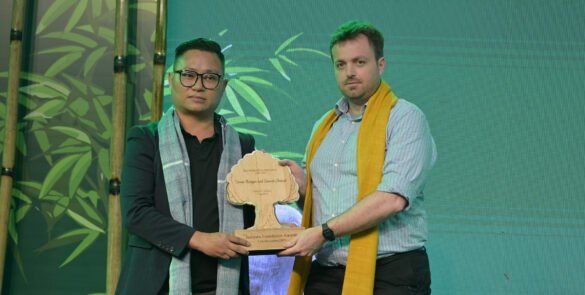
Hukai H. Zhimo, Nagaland
Hukai H. Zhimo was presented the award by Richard Milburn, Scholar, King’s College, London, United Kingdom
Hukai H. Zhimo, Forester-I and Head of the Wildlife Crime Control Unit, Dimapur, is a key frontline force in Nagaland’s conservation efforts, working within a state where most forests are under community stewardship. He has played a decisive role in curbing wildlife trafficking along National Highway 29, once a major trade route, by combining field intelligence, digital investigations, and market raids—leading to multiple prosecutions, including a landmark 2025 wildlife trafficking case.
Beyond enforcement, Hukai leads human–wildlife conflict management, particularly involving elephants in Wokha district, and coordinates rescue operations for animals caught in snares, floods, or settlement expansion. He also supports Nagaland’s growing network of 135+ Community Reserves, engaging village councils, youth, and schools in conservation and monitoring.
His work demonstrates how strong enforcement, community trust, and local stewardship together can safeguard Nagaland’s wildlife and forest heritage for future generations.
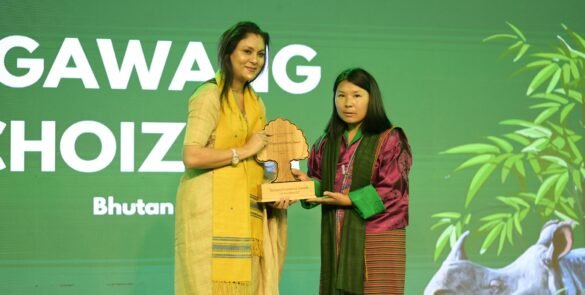
Ngawang Choizom, Bhutan
Ngawang Choizom was presented the award by Riniki Bhuyan Sarma, Chairperson and Managing Director, Pride East Entertainment
Ngawang Choizom is a dedicated conservation practitioner working across eastern Bhutan’s protected landscapes, including Sakteng Wildlife Sanctuary. Through routine fieldwork and biodiversity documentation, such as recording an Anaphilis plant in 2015—she contributes to Bhutan’s national conservation records and its extensive protected area network.
Her work supports Bhutan’s constitutional commitment to forest protection by monitoring sensitive habitats, reducing human–wildlife conflict, and assisting pastoral communities through practical measures like portable livestock corrals and awareness programmes. She also engages closely with villages, schools, and monasteries, strengthening community-based forest stewardship under Bhutan’s Forest and Nature Conservation framework.
Through consistent fieldwork and community engagement, Ngawang embodies Bhutan’s conservation model where cultural values, science, and shared responsibility sustain resilient Himalayan ecosystems.
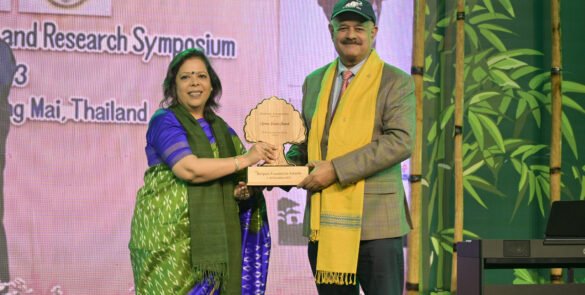
Dr. Kushal Konwar Sarma, Assam
Dr Kushal Konwar Sarma was presented the award by Leena Nandan, Former, Secretary of the Ministry of Environment, Forests & Climate Change (MoEFCC)
Dr. Kushal Konwar Sarma, known as the “Elephant Doctor,” is one of India’s most dedicated wildlife veterinarians, with over three decades of frontline service in human–elephant conflict management across Northeast India. Forest departments routinely rely on him for high-risk rescues, treatments, relocations, and emergency interventions involving both wild and captive elephants.
Over his career, Dr. Sarma has handled more than 10,000 elephants and safely captured 139 rogue bulls using specialised tranquilisation techniques adapted to the region’s terrain, an unmatched global record. A Padma Shri awardee and gold medallist from Assam Agricultural University, he has chosen field service over academia.
Beyond emergency response, he champions coexistence-based solutions, working with communities to promote non-lethal measures such as fruit-tree corridors, bamboo bio-fencing, and awareness on elephant behaviour. His lifelong commitment continues to shape policies and practices that protect both people and elephants across the Eastern Himalaya.
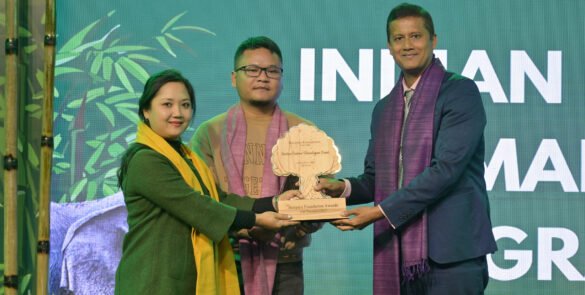
Zoram Entu Pawl (ZEP), Mizoram
Zoram Entu Pawl was presented the award by Rituraj Phukan, Founder, Indigenous People’s Climate Justice Forum
Zoram Entu Pawl (ZEP), founded in 2004 near Aizawl, has played a transformative role in restoring Mizoram’s fire-prone uplands by helping communities move away from jhum cultivation. Through the FARM Northeast Project, ZEP supports farming families in adopting permanent, diversified agriculture—terracing slopes and growing millet, fruits, spices, bamboo, and native trees instead of burning forests.
This shift has revitalised degraded hillsides, reduced forest fires, improved soil and moisture retention, and enabled wildlife such as hornbills to return. For communities, the change has brought year-round food security, higher incomes, and reduced labour. Recognised with the Indian Eastern Himalayan Grant, ZEP’s work shows how community-led stewardship can heal landscapes and build climate-resilient livelihoods, one seed at a time.
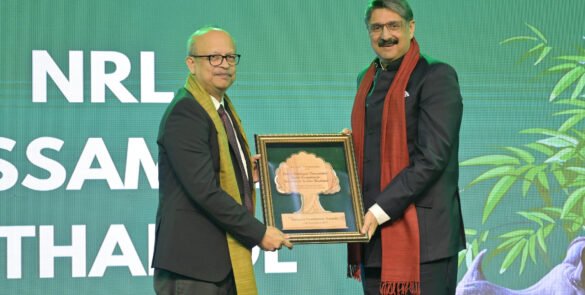
Numaligarh Refinery Limited, represented by Bhaskar Jyoti Phukan, Managing Director.
Numaligarh Refinery Limited, represented by Bhaskar Jyoti Phukan, Managing Director was presented the award by Harmeet Singh, IPS Director General of Police
Assam Bio Ethanol Pvt. Ltd. and Numaligarh Refinery Limited (NRL) have transformed Assam’s energy landscape by establishing India’s first commercial bamboo-to-ethanol biorefinery in Golaghat. Launched in 2020 and fully operational by 2025, the plant converts locally sourced bamboo into 150 million litres of second-generation ethanol annually, without using agricultural land or food crops.
Sourcing nearly 1,200 tonnes of bamboo daily from community forests and village groves, the initiative supports 25,000 rural households, especially women’s groups, restores degraded land, and avoids around 1.2 lakh tonnes of CO₂ emissions each year. By meeting about 12% of Assam’s ethanol blending needs, the project demonstrates how local biomass, scientific innovation, and community partnerships can drive a circular, low-carbon economy.
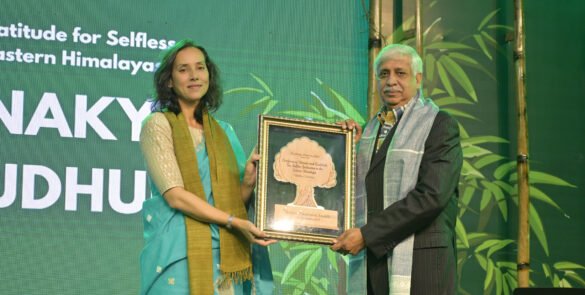
Chanakya Chaudhary
Chanakya Chaudhary was presented the award by Sanjukta Parashar, IPS IGP, CID-I, Assam
Chanakya Chaudhary, former Vice President of Corporate Services at Tata Steel and Director of the Tata Steel Foundation, has been instrumental in steering corporate leadership toward large-scale ecological restoration in eastern India. Under his guidance, over 1,000 hectares of degraded mining land in Noamundi, Jharkhand, were restored through a blend of scientific methods and Adivasi ecological knowledge, reviving watersheds that support ecosystems beyond the state.
His work extended across the Eastern Himalayan region, enabling community-led conservation involving more than 50,000 people, from mangrove restoration in the Sundarbans to wildlife corridors in Arunachal Pradesh. At the Eastern Himalayan Naturenomics™ Forum, he has championed the recognition of ecosystems as core economic assets, catalysing commitments for restoration at landscape scale.
Chaudhary’s leadership demonstrates how corporate influence, when aligned with community stewardship, can transform extractive legacies into lasting ecological resilience.
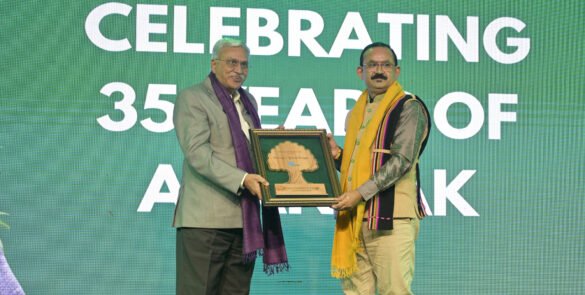
Aaranyak (Represented by Dr. Bibhab Kumar Talukdar, Executive Director)
Aaranyak was presented the award by Dr. Shailesh Nayak, Director, National Institute of Advanced Studies
Aaranyak, founded in 1989 in Guwahati by Bibhab Kumar Talukdar, is a leading conservation organisation in Northeast India, dedicated to science-based wildlife and ecosystem protection across the Eastern Himalayas. With 14 specialised divisions, it integrates research, advocacy, and community engagement, tackling threats to biodiversity from Kaziranga’s floodplains to Bhutan’s high ridges.
Over 35 years, Aaranyak has mapped tiger populations, restored over 500 hectares of degraded grasslands, translocated 200+ elephants, trained 1,000+ frontline forest staff, and supported 50,000+ local people in conservation roles. Collaborations with international partners and evidence-based advocacy have influenced regional policy, mitigated human-wildlife conflict, and prevented ecologically harmful projects.
Celebrating its 35th year in 2025, Aaranyak reaffirmed its vision for long-term ecological restoration and inclusive stewardship, cementing its role as a cornerstone of collaborative conservation in the Eastern Himalayas.
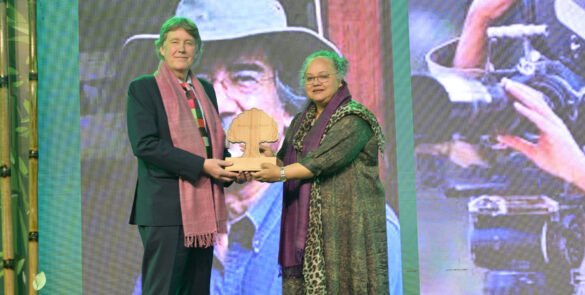
Mike H. Pandey, India (Represented by Nicholas Claxton, Partner, WOW Media Communications Group)
Mike H. Pandey, India (Represented by Nicholas Claxton, Partner, WOW Media Communications Group) was presented the award by Dr. Sunayana Sarkar, Assistant Professor, NMIMS University
Mike H. Pandey has spent over four decades shaping India’s conservation movement through visual storytelling. His landmark films—Shores of Silence, The Last Migration, and Vanishing Giants—have influenced wildlife protection, humane elephant relocation, and anti-ivory measures. His work on vultures contributed to the national ban on diclofenac, saving multiple species from extinction.
Since 1996, his weekly Earth Matters series on Doordarshan has brought conservation into millions of Indian homes. Recognised with three Wildscreen Panda Awards, the Padma Shri, and a place on the Jackson Wild Legacy list, Pandey continues hands-on fieldwork, mentoring filmmakers, tracking endangered species, and advocating for biodiversity protection.
